Most pastors and Bible teachers say the tithe belongs to your local church, because Malachi 3:10 speaks of bringing it “into the storehouse” and the New Testament has believers supporting their teachers (Galatians 6:6). A minority argue that the storehouse language allows broader giving to the poor and to ministries that feed people. Giving to a charity is good in either view. The disagreement concerns whether it counts as your tithe or sits on top of it.
Christians ask this question with sincere motives. One person feels the church spends too much on buildings. Another sees a food bank or mission doing more visible good. A third left a church after a hurt. This article lays out what the storehouse was, how the major views read the texts, and several practical ways to split your giving. It states each position fairly and leaves the final decision to you, your spouse and your own conscience before God.
Put it into practice
Work out the number first with the Tithe Calculator, then plan where each dollar goes using the Generosity Calculator.
What Malachi 3:10 says
“Bring the full tithe into the storehouse, that there may be food in my house. And thereby put me to the test, says the LORD of hosts, if I will not open the windows of heaven for you and pour down for you a blessing until there is no more need” (Malachi 3:10, ESV).
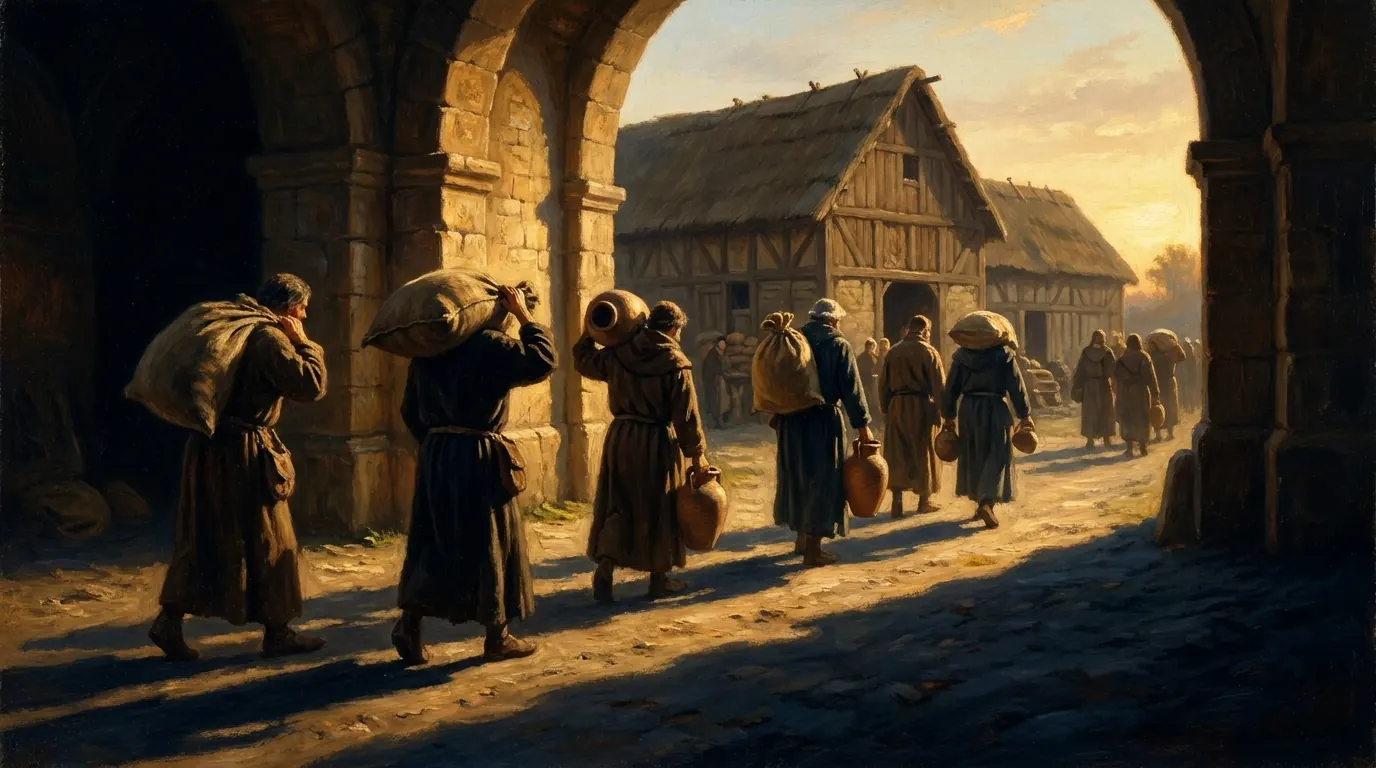
The storehouse was a room or set of rooms attached to the temple. It held grain, oil, wine and other produce that supported the priests and Levites, who had no land of their own. Nehemiah describes the arrangement: the people brought the tithes of grain, wine and oil to the storehouse for those who served (Nehemiah 10:37-38). When the people neglected it, the Levites went back to their fields, and Nehemiah restored the practice (Nehemiah 13:10-12). The purpose stated in Malachi is practical: “that there may be food in my house.”
That context shapes the question. The storehouse supported the people who carried out the worship and teaching of Israel. It also fed those in need, as Deuteronomy 14:28-29 shows, where every third year the tithe stayed in the towns for the Levite, the sojourner, the fatherless and the widow. For more on the passage, see our study of Malachi 3:10.
Three common views
View 1: The tithe belongs to your local church. This is the most common view among pastors and the one many denominations teach. The storehouse is the place where you are taught and served, and the modern equivalent is the congregation where you are a member. Galatians 6:6 supports this: “One who is taught the word must share all good things with the one who teaches” (ESV). So does 1 Timothy 5:17, “Let the elders who rule well be considered worthy of double honor, especially those who labor in preaching and teaching” (ESV). Offerings and charity go on top.
View 2: The tithe goes to the work of the church broadly. This view says the church is the body of believers and not one building. A tithe can fund the local church plus ministries that preach, teach and serve in its name, such as missionaries or a church-run food pantry. The storehouse principle is feeding God's work and God's people.
View 3: The New Testament sets no tithe, only generous giving. Many Bible teachers note that the New Testament never commands Christians to tithe by percentage. The apostles describe giving that is voluntary, proportional and cheerful. In this view, the choice between a church and a charity belongs to your conscience, and the question of tithe versus offering matters less. Our article on whether tithing is required in the New Testament sets out that case.
Honest readers will find that each view rests on real texts. The disagreement is old, and faithful Christians have landed in different places.
What the New Testament says about how to give
1 Corinthians 16:2. “On the first day of every week, each of you is to put something aside and store it up, as he may prosper, so that there will be no collecting when I come” (ESV). Paul tells the church to give regularly, proportionally and in an orderly way. The collection in view was for poor believers in Jerusalem, so the recipients were fellow Christians in need and the channel was the church.
2 Corinthians 9:7. “Each one must give as he has decided in his heart … for God loves a cheerful giver” (ESV). The heart matters more than the amount. See our study of 2 Corinthians 9:7.
Galatians 6:6. The teacher deserves support. A Christian who is fed by a church and gives it nothing leaves a clear instruction unfollowed.
James 1:27. “Religion that is pure and undefiled before God the Father is this: to visit orphans and widows in their affliction, and to keep oneself unstained from the world” (ESV). Care for the vulnerable is central to Christian life, and many churches do this work. When yours does not, giving to the poor directly is a faithful response.
Matthew 6:3-4. Jesus teaches that when you give to the needy, “do not let your left hand know what your right hand is doing” (ESV). Gifts to the poor are a separate category in his teaching, which tradition calls alms.
Matthew 23:23. Jesus tells the Pharisees that they tithe mint, dill and cumin yet neglect “the weightier matters of the law: justice and mercy and faithfulness. These you ought to have done, without neglecting the others” (ESV). Both the tithe and mercy get his endorsement.
The strongest arguments on each side
| Giving the tithe to your church | Giving part or all of it to charity |
|---|---|
| The storehouse supported those who served God's house (Mal 3:10; Neh 10:37-38) | The storehouse also fed the poor in the third-year tithe (Deut 14:28-29) |
| Teachers deserve support (Gal 6:6; 1 Tim 5:17) | The New Testament lists no percentage, so conscience guides (2 Cor 9:7) |
| Churches carry ordinary costs that nobody sees: staff, building, care, missions | A focused charity may serve the poor more directly or more efficiently |
| Regular giving builds membership and accountability (1 Cor 16:2) | Your church may be unhealthy or unaccountable with money |
| Common practice for most denominations | Some Christians see no rule that limits mercy to the church treasury |
Neither column is trivial. Left column: order, accountability and the plain duty to support those who teach. Right column: mercy and the freedom the New Testament gives. A thoughtful believer can hold both.
When you should not simply redirect the tithe
Some motives deserve an honest look before moving money. Giving to a charity because you want recognition, a tax receipt, or a way to avoid a church you disagree with leaves the underlying problem in place. If you are angry at your church's leadership, speak to the pastor or the elders first. Matthew 18 gives a pattern for conflict, and money is often the first symptom of an unresolved issue. If your church mishandles funds in a serious way, such as a lack of any financial reports, finding a healthier church is a better answer than quietly redirecting your gifts.
If you are in debt or on a tight budget, see how to start tithing when you are broke before you decide where the tithe goes.

Practical ways to split your giving
Here are three frameworks believers commonly use. They are examples that show how the numbers can work, and none of them is a biblical command.
| Framework | How it works | On $5,000 monthly income |
|---|---|---|
| Church first, charity on top | 10% to your church, then extra for the poor | $500 to church, plus whatever you add |
| Church-weighted split | Most of a 10% goal to church, a portion to a poverty charity or missionary | For example, $400 to church and $100 to a charity |
| Wider giving budget | A total giving target, with a base for the church and the rest by conscience | For example, 12%: $400 church, $100 missions, $100 local food ministry |
The arithmetic is plain percentages of the stated income. Talk through any plan with your spouse, and set the numbers in your budget so they stay steady.
Tax receipts and records
In the United States, a gift to a church or a qualified charitable organization may be tax deductible if you meet the IRS rules, and gifts to individuals generally are not. Rules about itemizing, receipts and limits change, so check IRS guidance (IRS Publication 526 covers charitable contributions) or ask a tax professional. Keep records of every gift either way. Tax treatment is a record-keeping matter and does not decide whether a gift honors God.
A framework for deciding
1. Start with your own church (Galatians 6:6). If you are taught and cared for there, supporting it is the plainest reading of the New Testament.
2. Know the reason for any change (2 Corinthians 9:7). Write down why you want to redirect. A clear reason survives scrutiny, and a vague one often hides a conflict.
3. Talk with your pastor or elders. Ask how the church uses funds and what it does for the poor. Many leaders welcome the question.
4. Give to the poor on top of the tithe (Matthew 6:3; James 1:27). Mercy giving is its own category and an obvious place for extra generosity.
5. Choose charities with care. Look at annual reports, ask how funds are used and prefer ministries that are open about their finances.
6. Give regularly and in advance (1 Corinthians 16:2). Set up a plan so that giving does not depend on mood.
7. Settle the question in your household. Peace between spouses matters more than a perfect system. Our guide on the difference between tithe and offering can help you name each category.
Internal study path
Continue with the difference between tithe and offering, the biblical tithing guide, Malachi 3:10 explained, Bible verses about giving to the poor, how to give anonymously, tithing in the New Testament, and our tithing hub.