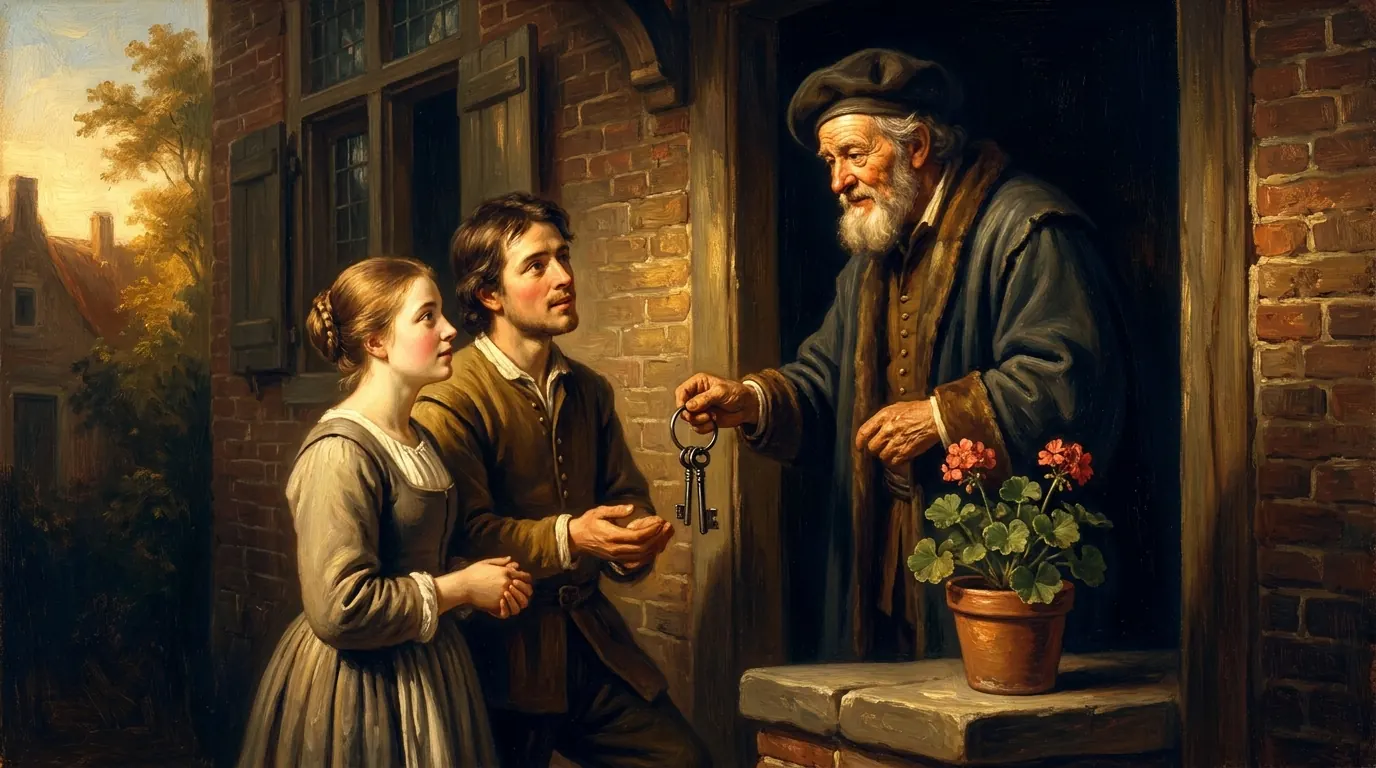
Yes, a Christian can be a landlord. Nothing in Scripture forbids owning property and letting others live in it for rent. What the Bible does regulate is how you treat the tenant: charge a fair price, keep the place in repair, pay what you owe promptly, return what is theirs, and show mercy to people in hardship.
The verses below give a working code of conduct for rental property. A checklist near the end turns them into habits you can follow this month.
Put it into practice
Rental income is income, and giving from it deserves a plan. Run the numbers with our Tithe Calculator and build a maintenance line into your plan with the Budget Calculator. More tools live on our free resources page.
Is renting out property a sin?
Two things usually raise the concern. One is the biblical ban on charging interest to a poor fellow Israelite. The other is the many warnings against the rich who exploit the poor. Both deserve a careful reading.
Leviticus 25:35-37 says: “If your brother becomes poor and cannot maintain himself with you, you shall support him… Take no interest from him or profit, but fear your God… You shall not lend him your money at interest, nor give him your food for profit.” The setting is a poor relative who has run out of resources. The command bars profiting from a neighbor's desperation. It does not prohibit every commercial exchange.
The Old Testament elsewhere assumes commerce and rental arrangements. Leviticus 25:14 says, “When you sell something to your neighbor or buy something from your neighbor's hand, you shall not wrong one another.” The rule is fairness in the deal. The same chapter describes houses being sold and redeemed, and hired workers living on a landowner's ground (Leviticus 25:29-40).
Christian writers hold a range of views. A minority reads any rental profit as a form of usury and avoids it. The majority view is that fair rent for a home or space is payment for a service and for capital at work, and that the biblical warnings target exploitation. This article takes the majority view while treating the minority concern with respect. If your conscience says no, follow it (Romans 14:23).
Fair rent: what a just price looks like
“A false balance is an abomination to the LORD, but a just weight is his delight” (Proverbs 11:1). Fair rent follows the market and the condition of the unit. What a desperate tenant might tolerate has no say in the price.
In practice, check what comparable units nearby rent for, price within that range, and explain any increase in writing with notice. If a tenant loses a job, ask before you threaten. Luke 6:31 puts the whole matter briefly: “As you wish that others would do to you, do so to them.” Ask yourself whether you would sign the lease you wrote.
Profit itself has a place in Scripture. Our study of profit in the Bible covers how the Old and New Testaments treat honest gain.
Repairs: a landlord's obligation to the tenant
Colossians 4:1 tells masters, “Treat your bondservants justly and fairly, knowing that you also have a Master in heaven.” The direct audience is the employer, and the principle extends to any position of power over another person. A tenant depends on you for heat, water, a working lock and a roof that keeps the rain out.
Local law sets minimum standards for habitability, and a Christian landlord meets those minimums quickly and aims higher. Respond to repair requests promptly. Keep a maintenance fund so that a broken furnace in January does not wait on your cash flow. Fix the hazard first and argue about cost later if you must.
Security deposits: return what belongs to the tenant
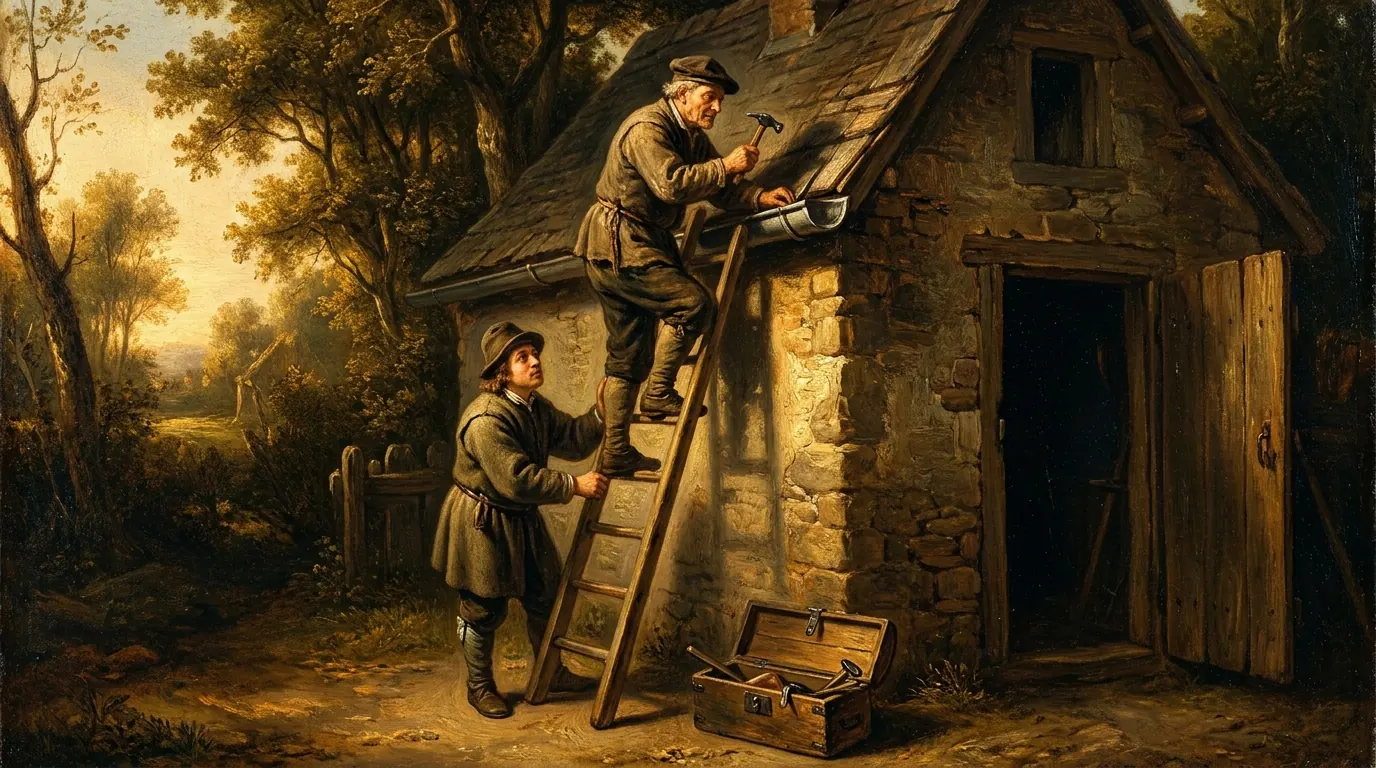
A deposit is the tenant's money held in trust. Deuteronomy 24:10-13 offers a close parallel. When a man took a poor neighbor's cloak as a pledge, he had to return it before sundown so the neighbor could sleep in it. The law protected the borrower's basic needs even while the debt stood.
Apply the same spirit. Return the deposit promptly after move-out. Itemize any deduction for real damage beyond normal wear, with receipts. State laws set deadlines and rules for deposits, and they vary, so check yours or ask a local attorney. A landlord who follows the law and deals generously within it has kept both the letter and the spirit.
Pay what you owe: James 5:4 and Deuteronomy 24:14-15
“Behold, the wages of the laborers who mowed your fields, which you kept back by fraud, are crying out against you” (James 5:4). The passage sits in a rebuke of wealthy landowners who withheld pay from the people who did their work.
Deuteronomy 24:14-15 sets the standard: “You shall not oppress a hired worker who is poor and needy… You shall give him his wages on the same day, before the sun sets.” Landlords hire people all the time: plumbers, roofers, cleaners, property managers. Pay them on time and in full. Never stall an invoice to improve your cash position. Our study of James 5:1-6 examines the warning in its context.
Boaz: a model owner
Ruth 2 shows an owner who manages his property with generosity. Boaz greeted his reapers with a blessing, “The LORD be with you!” and they answered in kind (Ruth 2:4). He told Ruth to stay in his fields and drink from what the young men drew. Then he gave an order to his workers: “Let her glean even among the sheaves, and do not reproach her. And also pull out some from the bundles for her and leave it for her to glean” (Ruth 2:15-16).

Boaz was a wealthy landowner who kept the law of gleaning (Leviticus 19:9-10), paid his workers well, and treated a foreign widow with dignity. The book presents him as honorable. His example answers the question directly: owning productive property and blessing the people who depend on it can go together. For a modern landlord this means a discount for a tenant in a crisis, patience when a paycheck is late once, or a repair done before the tenant asks.
Jesus' own teaching supports the reading that motive and treatment count most. He commended the servant who put his master's money to work (Matthew 25:14-30) and condemned the manager who squeezed a fellow servant over a small debt (Matthew 18:23-35). Owning and growing assets earns no rebuke in those stories. Harshness toward someone weaker does. Our study of the parable of the talents takes up the first passage.
A biblical landlord checklist
| Area | Practice | Scripture |
|---|---|---|
| Rent | Price near comparable local units and explain increases in writing | Proverbs 11:1; Leviticus 25:14 |
| Lease | Use a clear written lease with fees and rules spelled out | Genesis 23:16-18 (a documented transaction) |
| Repairs | Respond fast, meet local habitability standards and keep a repair fund | Colossians 4:1 |
| Deposit | Hold it as the tenant's money, return it promptly, itemize real damage | Deuteronomy 24:10-13 |
| Contractors | Pay invoices on time and in full | Deuteronomy 24:14-15; James 5:4 |
| Hardship | Ask before acting, offer a payment plan and keep confidences | Leviticus 25:35-37; Luke 6:31 |
| Debt | Buy only what you can carry through vacancies and repairs | Proverbs 22:7; Luke 14:28 |
| Giving | Give from the net rental income as you decide before God | Proverbs 3:9 |
Screening and fairness: who you rent to
Fairness starts before the lease. Apply the same written criteria to every applicant: income, references, rental history. Federal and state fair housing laws bar discrimination on protected grounds, and those laws set a floor. James 2:1-9 sets the Christian standard higher, by warning the church against favoring the well-dressed visitor over the poor one. Consistent screening protects you legally, and it also protects your witness.
Put decisions in writing, keep the same standards for every applicant, and explain a denial politely. A tenant who feels respected during a “no” is more likely to think well of the Lord's people later.
A scenario: the duplex
Say you own a duplex and rent one side for $1,400 a month. Your costs on that unit average $300 for taxes and insurance, $150 toward repairs and $500 for the loan. That leaves $450 a month before vacancies. A tenant loses hours at work in March and asks for a two-week delay.
A landlord who follows the checklist has already set aside a repair fund and a vacancy cushion, so the delay is affordable. Here he agrees in writing to a short payment plan, does not charge a late fee this once, and fixes the leaking faucet the tenant mentioned last week. He loses a little cash flow. He keeps a good tenant and a clear conscience, and Proverbs 19:17 applies: “Whoever is generous to the poor lends to the LORD.”
A framework in six steps
1. Settle your conscience. Read Leviticus 25 and decide with a clear view of the minority position. Talk it through with your pastor and spouse.
2. Buy within your means (Proverbs 22:7). Stress-test the property for two months of vacancy and a major repair before you close.
3. Write a fair lease. Put terms in writing and follow your state's landlord-tenant law. Consult a local attorney when in doubt.
4. Keep the property safe and in repair (Colossians 4:1). Use a monthly maintenance set-aside.
5. Handle deposits and payments promptly (Deuteronomy 24:10-15). Return the deposit and pay vendors on time.
6. Practice mercy and give (Ruth 2; Proverbs 3:9). Decide in advance how you handle hardship, and give from the income before it disappears into expenses.
Internal study path
Continue with what the Bible says about loaning money, biblical investing principles, is buying a house biblical, what the Bible says about buying land, greed in the Bible, and our stewardship hub.