The Bible never commands anyone to buy gold. It mentions gold and silver hundreds of times, treats them as real money and real beauty, and also warns that neither can rescue anyone in the day of God's judgment. What Scripture does teach is wisdom: store up in years of plenty (Genesis 41), spread what you have across more than one place (Ecclesiastes 11:2), and keep your trust in God alone. This page is general education. It gives no investment advice and no price predictions.
Put it into practice
Start with the basics. Build your safety net with the Emergency Fund Calculator, see the whole picture in the Net Worth Calculator, and read the principles behind biblical investing. For the full biblical picture of money, grab the free Biblical Blueprint for Money (41-page PDF, no signup).
What the Bible says about gold and silver
Gold appears at the very start of Scripture. Genesis 2:11-12 says the land of Havilah had gold, and that “the gold of that land is good.” Abraham is described as “very rich in livestock, in silver, and in gold” (Genesis 13:2). When he bought a burial cave for Sarah, he weighed out 400 shekels of silver (Genesis 23:16). In the ancient world, silver and gold were money and stores of value. The Bible does not treat them as evil.
Gold also served worship. God commanded gold for the ark and the tabernacle (Exodus 25). Solomon received about 666 talents of gold in a single year, according to 1 Kings 10:14. That verse is the historical record of a kingdom's wealth, and it does not read as a recommendation.
The Bible also ranks gold below what matters most. Proverbs 16:16 says, “How much better to get wisdom than gold!” Proverbs 8:10-11 makes the same comparison. The apostle Peter writes that the tested genuineness of your faith is “more precious than gold that perishes though it is tested by fire” (1 Peter 1:7).
The warnings become sharp when gold is treated as a savior. Ezekiel 7:19 says of the day of the LORD's wrath, “They cast their silver into the streets, and their gold is like an unclean thing. Their silver and gold are not able to deliver them.” Zephaniah 1:18 repeats the point. James 5:3 warns that hoarded gold and silver will testify against the hoarder. The golden calf of Exodus 32 shows what happens when gold becomes an object of worship.
What Joseph actually stored
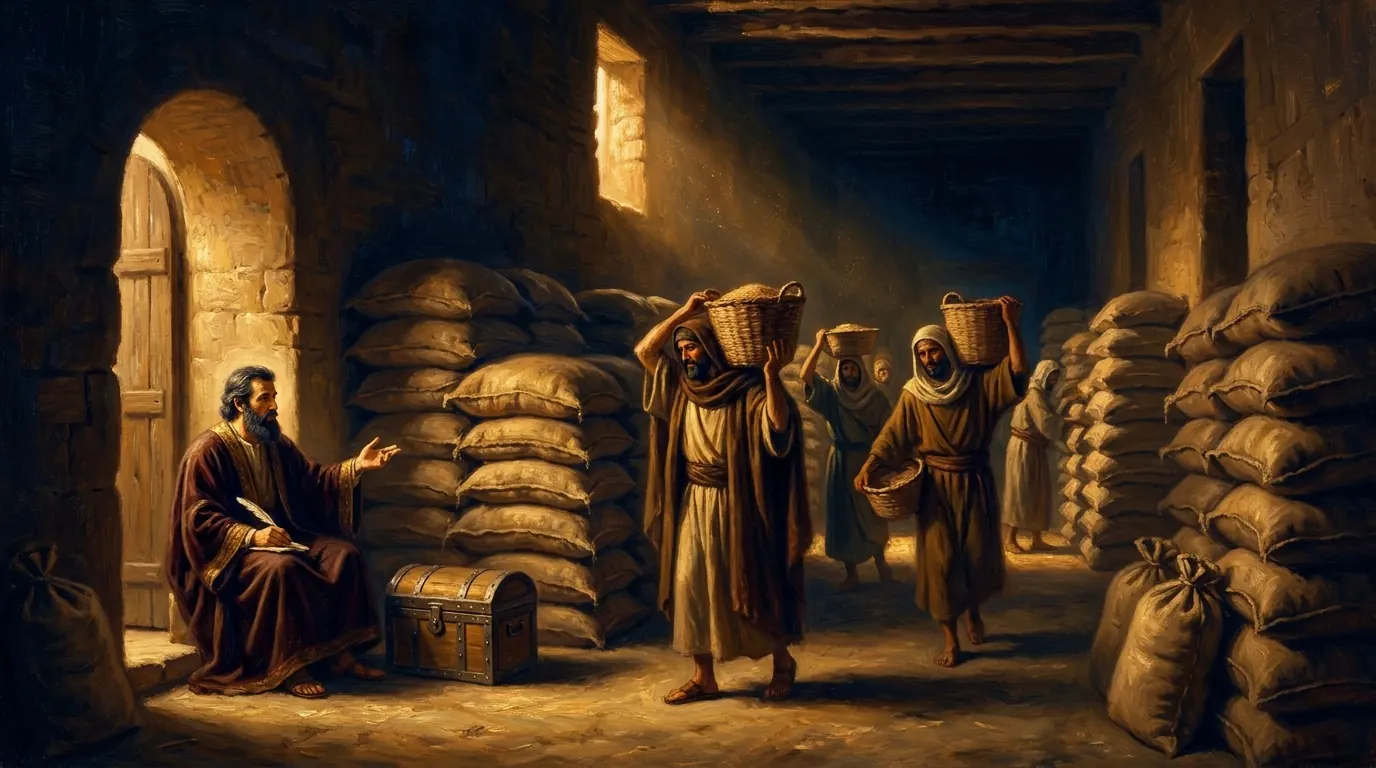
Many articles on this topic point to Joseph in Egypt as a model for stockpiling. The account is worth reading carefully. Pharaoh dreamed of seven fat cows and seven thin cows, and Joseph told him to appoint overseers to collect a fifth of the harvest during the seven years of plenty and store it for the seven years of famine (Genesis 41:34-36).
Joseph stored grain. Nothing in the text says he stored gold or silver. The famine then reveals what mattered. When the people ran out of food, they paid Joseph with their money until, in Genesis 47:14-15, “the money was all spent.” Then they traded their livestock, then their land. In the hardest years, food was the asset that could not be replaced by coin.
The principle from Joseph is preparation. Joseph saved in a good season for a hard one, with a plan and honest management. Fear of the future did not drive him. God had warned him through the dream, and the warning came with clear instructions. The general lesson for us is to build reserves before a crisis, and to keep some of them in forms that meet real needs: cash for emergencies, food and supplies for short disruptions, and productive assets for the long run.
Diversification: seven, even eight
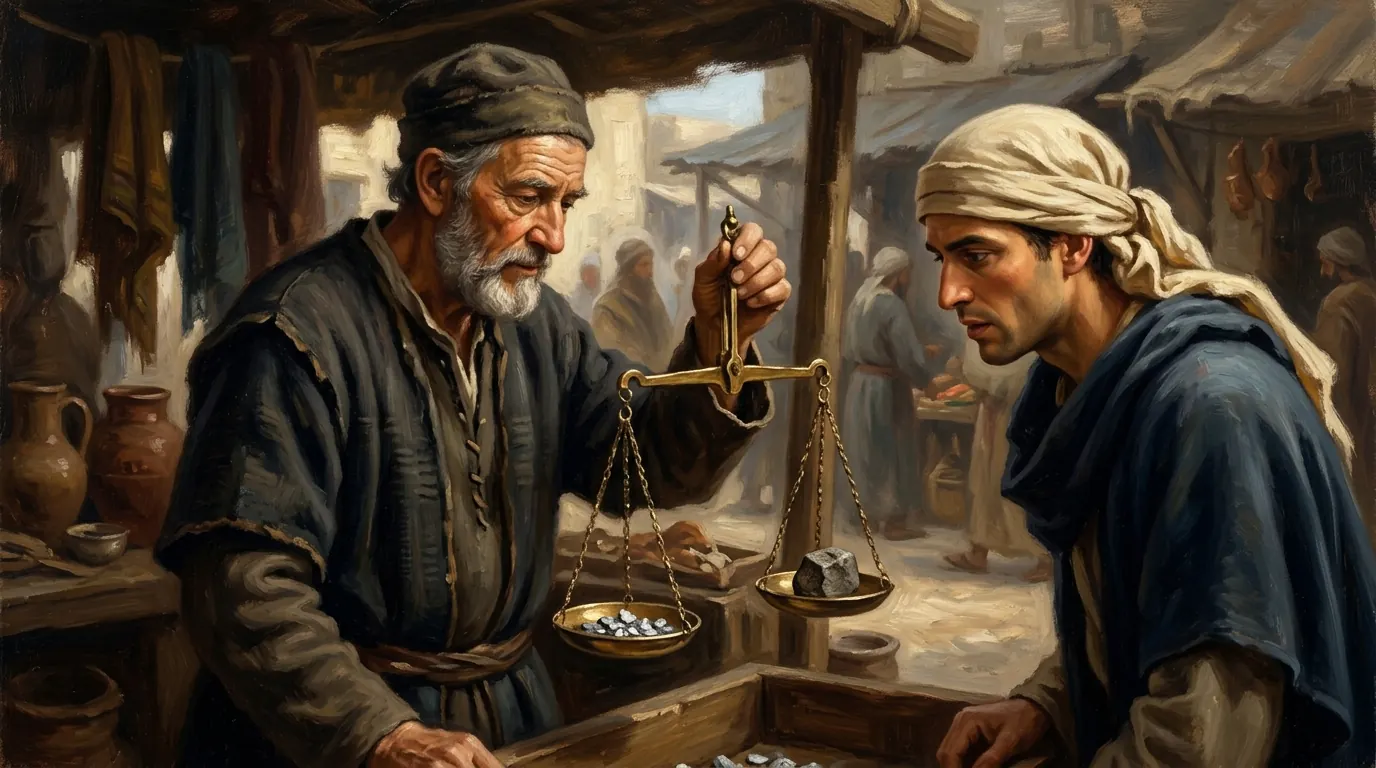
The verse most connected with spreading your assets is Ecclesiastes 11:2: “Give a portion to seven, or even to eight, for you know not what disaster may happen on earth.” The context is business and generosity (verse 1 says to cast your bread upon the waters). The idea applies to money too. No one knows which single risk will arrive, so a wise person does not stake everything on one place.
Ecclesiastes 11:6 adds, “In the morning sow your seed, and at evening withhold not your hand, for you do not know which will prosper, this or that, or whether both alike will be good.” Keep working, keep planting, and spread the effort.
Modern diversification means owning different kinds of assets that do not all rise and fall together. The table below shows how Scripture speaks to each category. It carries no recommended percentages, and it is not a prediction of how any asset will perform.
| Kind of asset | Biblical picture | A wise caution |
|---|---|---|
| Cash and emergency savings | Prov 21:20: treasure in the house of the wise | Inflation can shrink cash over many years |
| Food and supplies | Gen 41: Joseph's grain; Prov 6:6-8: the ant's stores | Storage costs and spoilage |
| Gold and silver | Gen 13:2, 23:16: money and wealth in Abraham's day | Ezek 7:19: cannot deliver on its own; prices rise and fall; storage and resale costs |
| Land and property | Jer 32:9-15: Jeremiah bought a field in a crisis; Prov 31:16 | Taxes, upkeep, and debt risk |
| Business and work | Prov 14:23: profit in all hard work; Matt 25:14-30 talents | Requires skill and time |
| Giving | Eccl 11:1-2; Luke 12:33: a treasure that does not fail | Give from a plan |
Notice that the last row belongs on the list. Ecclesiastes 11:1-2 is a verse about generosity, and Jesus tells us to store up treasure in heaven where no thief or moth destroys (Matthew 6:19-21). Our page on Matthew 6:19-21 goes deeper.
What the Bible does not say
The Bible does not tell you that gold will protect your family when the economy fails, and it does not forbid owning it. It does not give a percentage to hold. It does not promise that any asset will rise or that any collapse is coming on a given date. Anyone who claims Scripture predicts a market crash, or that Christians must buy a specific metal, is adding to the text.
Salespeople sometimes use fear and Bible verses together. Be cautious of pressure to act fast, offers of guaranteed returns, prices far above the metal's value, or a promise that the Lord requires this purchase. Proverbs 14:15 says, “The simple believes everything, but the prudent gives thought to his steps.” Our page on Christian scam protection lists warning signs.
The Bible also warns against the opposite error of foolish risk. Proverbs 21:5 says the plans of the diligent lead surely to abundance, while haste leads to poverty. Read our page on get-rich-quick schemes for that side of the picture.
Gold in ordinary Christian households
Christian families hold a wide range of views here. Some own a small amount of gold or silver coins as a personal reserve. Others own none and put everything in retirement accounts, a home, and a business. Both can be faithful. The following scenarios are illustrations only and give no recommendation for what you should own.
The family with no emergency fund. A household earning $5,000 a month with $400 in savings has a more urgent need than any metal. Three to six months of expenses in cash comes first. Gold does not pay a car repair bill on Tuesday morning without a sale.
The retiree with a large pension and savings. A retired couple with stable income might ask a fee-only advisor whether a small share in precious metals fits a diversified plan. The decision belongs to their whole situation, their tax position and their tolerance for swings in price.
The anxious saver. A man reads alarming headlines and wants to move his whole retirement into coins. Scripture invites him to bring fear to God in prayer (Philippians 4:6-7) and to talk with a pastor and a qualified advisor before making any large change. Peace and wisdom go together.

A framework: prepare with wisdom and trust God
1. Start with the foundation. Pay off high-interest debt and build a cash emergency fund of three to six months of expenses. Use the Emergency Fund Calculator.
2. Give first. Honor the Lord with the firstfruits (Proverbs 3:9). Generosity is part of diversification, and it guards the heart against trusting money.
3. Spread your assets. Follow Ecclesiastes 11:2 with a mix of cash, retirement investments, a home or other productive property, and skills or income streams. Our page on multiple income streams shows the income side.
4. Understand what you buy. If you are considering precious metals, learn about dealer markups, storage, insurance, resale costs and taxes. Ask how you would sell it, and what you would receive.
5. Keep any share modest and deliberate. Decide the role of any single asset before you buy it. A qualified fee-only financial advisor and a tax professional can help you fit it into your plan.
6. Store a little of what you consume. Joseph stored grain. A few weeks of food, water and basic supplies covers the most common disruptions such as storms and job loss.
7. Hold it loosely. Psalm 20:7 says some trust in chariots and some in horses, but we trust in the name of the LORD our God. Check your motives regularly: is this asset a tool, or has it become your security?
Internal study path
Keep going with biblical investing principles, multiple income streams in the Bible, whether Christians should invest, buying land and real estate, the biblical emergency fund, how to find a Christian financial advisor, and our stewardship hub.