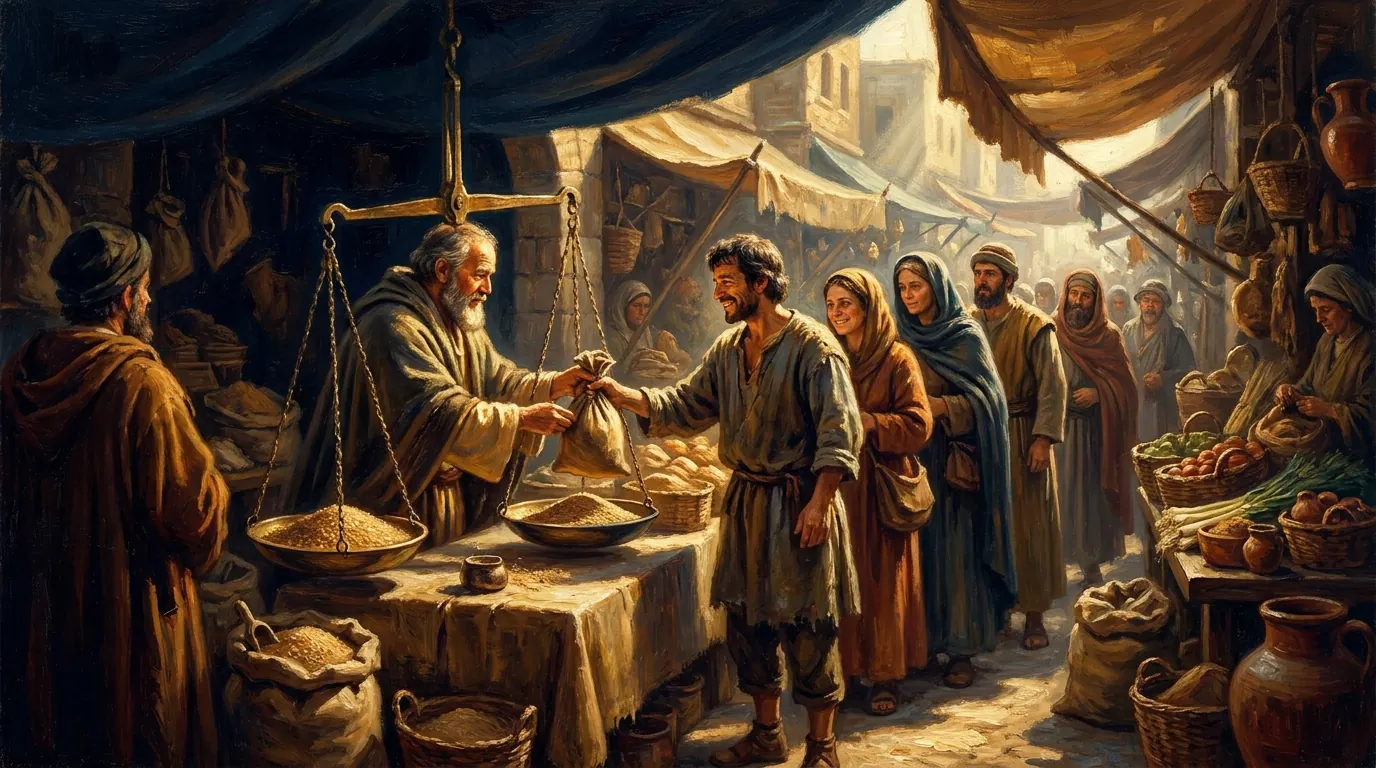
Proverbs 22:1 says, “A good name is more desirable than great riches; to be esteemed is better than silver or gold” (NIV). A “good name” is your reputation for honesty and reliability, and the verse ranks it above a large bank balance. In business and personal finance, that name shows up as credit, customers, references, loans from friends, and doors that open before you knock.
Put it into practice
Start with an honest look at where you stand. Add up what you own and what you owe in our Net Worth Calculator, then map a way to clear any late or unpaid balance with the Debt Snowball Calculator. The free Biblical Blueprint for Money (41-page PDF, no signup) shows how integrity fits the whole plan.
What Proverbs 22:1 means
The Hebrew word for “name” is shem. In the ancient world a name carried the person’s whole record: what people said about him when he was not in the room. Solomon says that record is worth more than “great riches.” The second half of the verse names the result, which is favor or esteem. People extend it freely to someone they trust.
The next verse sets the frame. Proverbs 22:2 says, “Rich and poor have this in common: The LORD is the Maker of them all.” A good name belongs to anyone, at any income. The janitor who has never missed a shift owns one. The billionaire who lied his way up may have lost his.
Other verses agree. Ecclesiastes 7:1 says, “A good name is better than fine perfume.” Proverbs 28:6 says, “Better the poor whose walk is blameless than the rich whose ways are perverse.” Proverbs 10:7 adds that the memory of the righteous is a blessing. Scripture returns to this point often, so it is a settled thread of wisdom and a very practical one.
The verse does not condemn wealth. Proverbs celebrates honest riches in many places (see our page on Proverbs 10:22). The verse sets an order of priority when you have to choose. If a deal would earn $50,000 and cost your word, the proverb tells you which one to keep.
Your name in dollars
A good name looks like a soft virtue until you see how it pays. The table shows where reputation turns into money. All figures are illustrative round numbers.
| Where your name shows up | What builds it | Illustrative payoff or cost |
|---|---|---|
| Credit history | Paying every bill on time for years | A rate one point lower on a $10,000 balance saves about $100 in a year |
| Repeat customers | Fair prices, finished work, quick fixes | A client worth $400 a year who stays ten years brings $4,000, before any referrals |
| Employer references | Showing up, honest reporting, owning mistakes | Hiring managers call references, and a strong one can decide between two equal candidates |
| Personal loans from family | Paying back on the date you promised | The next $1,000 emergency loan is available at 0% because they know you repay |
| Business shortcuts | Cutting a corner to save $600 on a repair | A refund, a bad review, and lost clients can cost many times the $600 |
On credit specifically, FICO publishes the weights it gives each factor. Its website lists payment history as the largest piece of a score, at 35%, and amounts owed as the next, at 30%. Late payments can generally stay on a credit report for seven years under the Fair Credit Reporting Act, and bankruptcies can stay longer. Check the current figures at myFICO.com and with the credit bureaus, since rules and weights are revised from time to time.
Picture two painters who each quote $4,800 for the same house. One has a decade of finished jobs and neighbors who recommend him. The other is unknown. The homeowner hires the first painter even at $5,200, because his name lowers the risk. On twelve jobs a year, a $400 premium on each adds up to $4,800 of extra income, and none of it required a single sale pitch. The good name never appears on a net worth statement, and it still works as an asset.
Your credit score is a number that measures one slice of your reputation. Your neighbors and your church community hold another slice. Both grow slowly and can be damaged in a day.

Paying debts is part of a good name
Psalm 37:21 draws a plain line: “The wicked borrow and do not repay, but the righteous give generously.” Romans 13:7-8 says to give everyone what you owe them, and to owe no one anything except love. Proverbs 3:27-28 speaks to the person who has the money and stalls: do not tell a neighbor to come back tomorrow when the payment is in your hand.
That standard covers every kind of debt: credit cards, personal loans from a friend, a bill from the plumber. It also covers the promises that never make a credit report, which are often the ones that define you locally. A $200 loan from a coworker, repaid on the day you said, teaches everyone who knows about it something about you.
Say you owe a friend $600 and can pay $100 a month. Tell him the plan in plain words: six payments, on the 1st of each month, starting this week. Then pay on the 1st. Each payment adds to his confidence in you, and by the sixth you have earned something the $600 could not buy.
Hard seasons happen. When a payment will be late, call before it is late. Tell the creditor the amount you can pay and the date, and then do it. A person who communicates keeps the name even while struggling. A person who disappears loses it. Our page on what the Bible says about debt covers the wider picture.
Bankruptcy is a difficult case, and Christians differ on it. Some read it as a legal tool provided by law, and others feel a moral duty to repay the full amount when they can. Both groups care about the name. Our page on whether a Christian can file bankruptcy lays out the arguments, and a pastor and an attorney are good voices to consult.
Integrity in business
The Old Testament law had rules for honest commerce because dishonest commerce was common. Leviticus 19:35-36 commands honest scales, weights, and measures. Proverbs 11:1 says, “The LORD detests dishonest scales, but accurate weights find favor with him.” Proverbs 20:23 repeats the point. Leviticus 19:13 tells employers not to hold back a hired worker’s wages overnight, and Deuteronomy 24:14-15 defends the day laborer, poor and needy.
Modern versions of those scales are easy to find:
Accurate quotes and invoices. If you find you overcharged a client $340, you call, apologize, and refund it. That call may cost $340 and protect a client worth $2,400 a year.
Truthful marketing. Claims about results, reviews, and prices state what is real.
Prompt pay. Employees and vendors get paid on the date promised. Late pay to a small supplier can damage a business that has less cash than you do.
Disclosure. If you are selling a car with a transmission problem, say so. Proverbs 21:6 says a fortune made by a lying tongue is a fleeting vapor and a deadly snare.
Honest records. Keep books that would pass an inspection by a friendly stranger. Luke 16:10 says the person faithful in very little is faithful in much, and dishonest in very little is dishonest in much.
Employees carry the name of a business too. Colossians 3:23 says to work with all your heart, as for the Lord. Our page on working as unto the Lord applies that to daily work, and Bible verses about business gathers more of the passages.

When the name is already damaged
Some readers feel the verse as a wound. A debt may have gone to collections. Perhaps a business failed and left unpaid vendors behind. Or a lie came to light. Scripture offers a path back, and it is concrete.
Zacchaeus, a tax collector who had cheated people, met Jesus and said he would give half his goods to the poor and repay anyone he had defrauded four times over (Luke 19:8). The law in Leviticus 6:4-5 asked for full restitution plus a fifth. In both cases, restoring a name means making the other person whole with real money, along with a sincere apology.
Here is a workable version. List everyone you owe, with the amount. Contact each one personally. Offer a payment schedule you can keep. Start with the smallest debt if you are following a snowball plan, or the ones with people you know personally. Put the dates on a calendar and let nothing move them. A consistent record over 12 or 24 months rebuilds trust more than any speech. The score follows the behavior, and the people who watched you repay remember it long after the balance reaches zero.
1 Timothy 3:7 says an overseer must be well thought of by outsiders. Christian leaders carry that calling, and every believer carries a smaller version of it. The people outside your church notice how you pay the mechanic.
A working framework
1. Decide in advance that your word is not for sale. Write down a short list of lines you will not cross for money, and share it with your spouse.
2. Set every bill to pay on time. Automatic payment for at least the minimum protects your record while you work on the balance.
3. Communicate early. Call before a due date passes, name a specific amount, and confirm in writing.
4. Price and describe honestly. Give quotes in writing, state defects, and keep invoices accurate to the dollar.
5. Pay people on the day you said. Employees, contractors, and friends all count.
6. Fix errors quickly and fully. When you find a mistake in your favor, report it and repay it, following Zacchaeus.
7. Give generously. Proverbs 22:9 says the generous will themselves be blessed, for they share their food with the poor. Generosity is one of the best advertisements of a trustworthy person.
Internal study path
Keep going with Bible verses about integrity, Proverbs 22:7, Proverbs on money, whether debt is a sin, business partnership in the Bible, Solomon’s quotes on money, and our debt freedom hub.