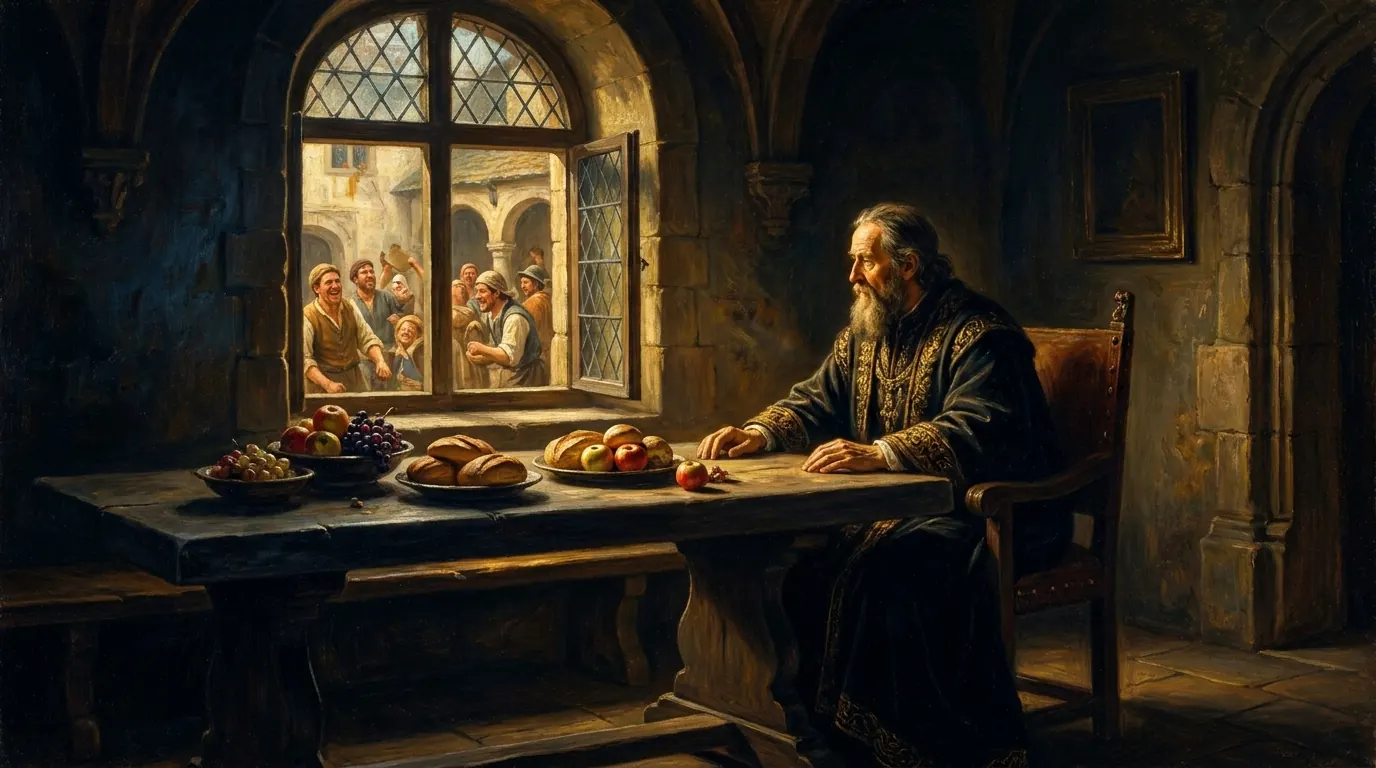
Ecclesiastes 6:2 describes a man to whom God gives wealth, possessions and honor, so that he lacks nothing he desires, yet God does not let him enjoy any of it, and a stranger enjoys it instead. Solomon calls this a grievous evil. The verse teaches that having money and enjoying money are two separate gifts, and that both come from God. It also warns that what you build can pass to people you never chose.
Put it into practice
See where you stand with our Net Worth Calculator, then plan the enjoyment and the giving in your budget with the Budget Calculator. For the whole biblical picture of money, grab the free Biblical Blueprint for Money (41-page PDF, no signup).
The verse in full
Ecclesiastes 6:1-2 reads: “There is an evil that I have seen under the sun, and it lies heavy on mankind: a man to whom God gives wealth, possessions, and honor, so that he lacks nothing of all that he desires, yet God does not give him power to enjoy them, but a stranger enjoys them. This is vanity; it is a grievous evil.”
Read it slowly. The man in the verse is not a fool or a thief. God gave him the wealth. He lacks nothing he wants, which is more than most people ever say. What he lacks is the power to enjoy it. The word “stranger” here points to someone outside the family circle, a person who did not earn the estate and receives its pleasure.
Solomon does not treat this as a small problem. He says it lies heavy on people. The book of Ecclesiastes keeps returning to a hard fact: getting is not the same as enjoying, and neither is the same as keeping. Our summary of Ecclesiastes gives the wider setting, and the passage sits beside the warning in Ecclesiastes 5:10 that whoever loves money will never have enough.
The earner and the owner
Two people can stand in front of the same bank statement and have very different lives. One earns, and the other enjoys. Ecclesiastes 6 shows the gap.
| Question | The earner who cannot enjoy | The steward who can |
|---|---|---|
| What is the money for? | To be counted and protected | To be used with thanks and shared |
| How much is enough? | No number ever answers it | A number, chosen in advance |
| Who receives it later? | Whoever the law names by default | People chosen by a written plan |
| What does a good day look like? | A higher balance | Work done, a meal shared, some giving |
The verse names at least three ways a person can fail to enjoy what God gives. The first is the inner failure: worry, comparison, and the endless wish for more. The second is a failure of health or time. Many people work into old age and then lack the strength to travel or even to sit in a garden. The third is the failure at the end, when the estate goes to a stranger because no one made a plan.
The other side: enjoyment as God's gift
Solomon does not tell us to hate money. Two chapters earlier he gives the answer to the problem: “Everyone also to whom God has given wealth and possessions and power to enjoy them, and to accept his lot and rejoice in his toil—this is the gift of God” (Ecclesiastes 5:19). Enjoyment is a gift. Two verses later comes the picture of a person who is kept busy “with joy in his heart” (Ecclesiastes 5:20).
The New Testament agrees. Paul tells Timothy to charge the rich not to be haughty or set their hope on riches, “but on God, who richly provides us with everything to enjoy” (1 Timothy 6:17). That verse pairs enjoyment with generosity in the next line. Our page on 1 Timothy 6:17-19 walks through both halves.
Hebrews 13:5 gives the attitude that opens the door: “Keep your life free from love of money, and be content with what you have.” Contentment is a practice you can learn, and it grows through daily habit long before any raise arrives. Our page on contentment in the Bible lays out that practice.
What else Solomon says in chapter 6
Ecclesiastes 6 keeps pressing on the same wound. Verses 3 through 6 imagine a man with a hundred children and a long life who is never satisfied with good things. Solomon says he would have been better off never born. The language is severe on purpose. A long life and a large family are blessings, and they cannot fix an unsatisfied heart.
Verse 7 gives the mechanism: “All the toil of man is for his mouth, yet his appetite is not satisfied.” People work to eat, then work again to eat more. The appetite stays open no matter how much goes in. Verse 9 offers the way out: “Better is the sight of the eyes than the wandering of desire.” Enjoy what is in front of you. A restless wish for something else steals it.
Jesus makes the same point in Luke 12:15: “Take care, and be on your guard against all covetousness, for one's life does not consist in the abundance of his possessions.” Our page on Luke 12:15 explains it. Solomon's grievous evil and Jesus's warning describe one problem from two sides.
A simple test helps. Ask, “When did I last enjoy something I already own?” If the answer takes long to find, the appetite may be running the household. A slow meal with the family, a walk in a park you paid for through taxes, a book you bought a year ago and never opened: these cost little and count as real enjoyment. Solomon's advice in chapter 5 fits here: receive the day's portion as a gift, say thanks, and let the work of your hands be a source of gladness. A household that practices this often finds that its wants shrink and its giving grows.
Contentment in numbers
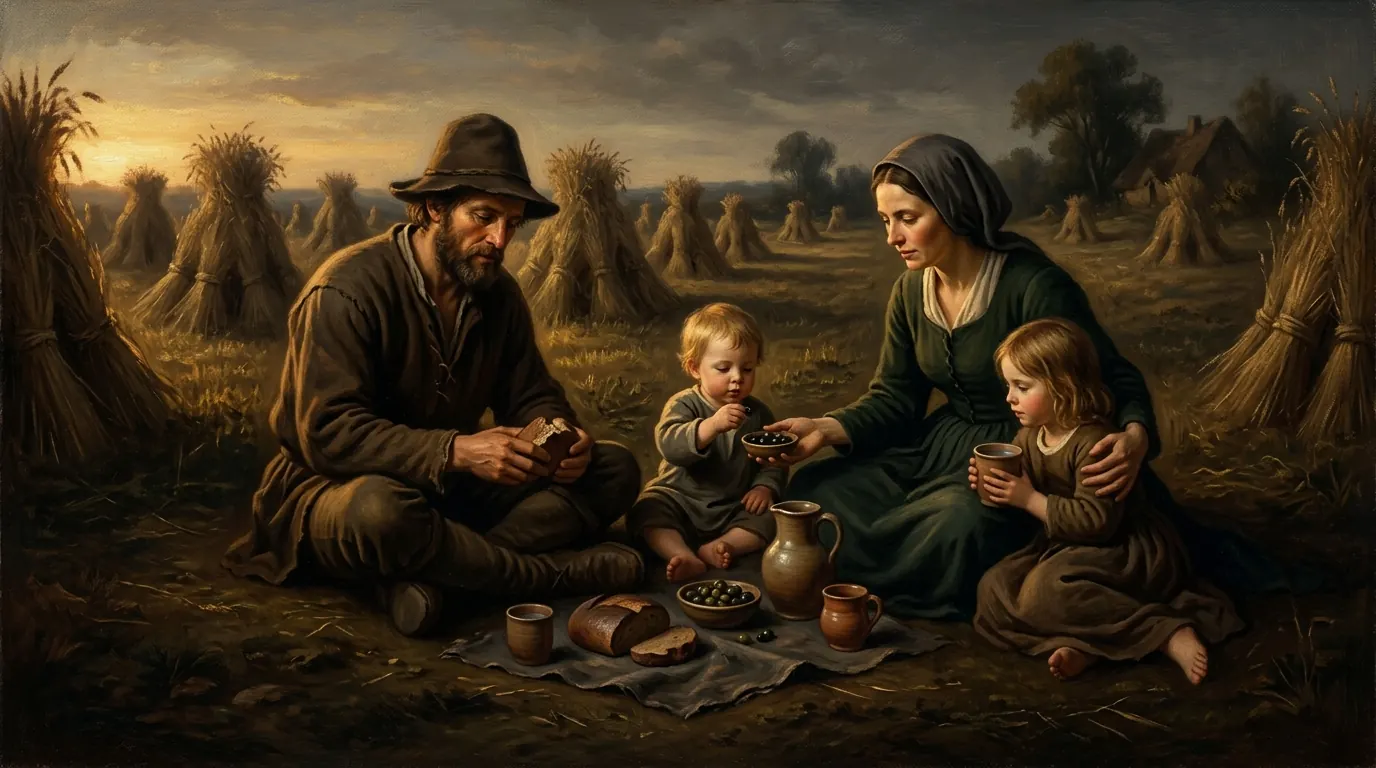
Contentment gets practical when you decide what “enough” means before the money arrives. Consider a household earning $6,000 a month after tax. The plan below is one illustration, and your figures and priorities will differ.
| Line in the plan | Monthly | Purpose |
|---|---|---|
| Giving | $600 | Honor God first and loosen the grip of money |
| Needs (housing, food, transport, insurance) | $3,600 | Provision for the household |
| Saving and investing | $900 | Security and the future |
| Planned enjoyment | $600 | Meals out, a hobby, a trip fund. Spent without guilt. |
| Buffer and irregular costs | $300 | Gifts, repairs, surprises |
The enjoyment line is in the plan on purpose. Many faithful people never spend a dollar on rest or delight, because they think every dollar must justify itself. Solomon says the power to enjoy is a gift, and a budget can make room to receive it. The biblical 50/30/20 budget is another way to set the same idea.
The stranger and estate planning
The verse ends with a stranger enjoying the wealth. You cannot control everything after you die, but you can avoid an accidental “stranger.” Proverbs 13:22 says, “A good man leaves an inheritance to his children's children.” Leaving an inheritance takes a plan.
Without a will or trust, state law decides who receives your property, and the result may not match your wishes. Property can be delayed in court, and children can be left without guidance. A basic plan usually includes a will or trust, beneficiary designations on retirement accounts and insurance, a durable power of attorney, and a health care directive. The exact tools depend on your state and situation, so work with an estate-planning attorney. Our page on Christian estate planning explains the steps.
A plan also covers the gift you give while you are alive. Some parents help a child buy a first home, pay a grandchild's tuition, or support a ministry now, and then see the result. Giving while living lets you enjoy the joy of it, and that is a way to enjoy the wealth God gave you. Any large gift has tax and legal consequences, so ask a qualified professional first.
Jesus told a parable about a rich man who stored up crops and planned to relax, and God called him a fool, because his life would be required of him that night (Luke 12:16-21). Read the story next to Ecclesiastes 6. The rich fool planned his barns but not his death or his giving. See our page on the parable of the rich fool.

A framework: receive what God gives
1. Define enough. Choose a monthly figure that covers your needs, your giving and a fair measure of comfort. Write it down and review it each year.
2. Build enjoyment into the budget. Choose a small monthly amount for rest, hospitality, hobbies and family time. Spend it with thanks.
3. Practice gratitude daily. A short prayer over meals and paychecks trains the eyes to see gifts. Gratitude fights the restless wish for more.
4. Give on schedule. Generosity breaks the hold of money. It is hard to be owned by what you regularly give away.
5. Protect your health and rest. Take a weekly day of rest and keep medical checkups. Wealth you have no strength to enjoy is the exact picture in the verse.
6. Decide who the stranger will be. Meet with an estate-planning attorney, name your beneficiaries, and tell your family where the documents are.
7. Enjoy the gift while you can. Share a meal, take the trip you saved for, and give to a child or ministry now. Solomon calls that the gift of God.
Internal study path
Keep going with Ecclesiastes 5:10, the book of Ecclesiastes, contentment in the Bible, Christian estate planning, Proverbs 13:22, 1 Timothy 6:17-19, and our stewardship hub.