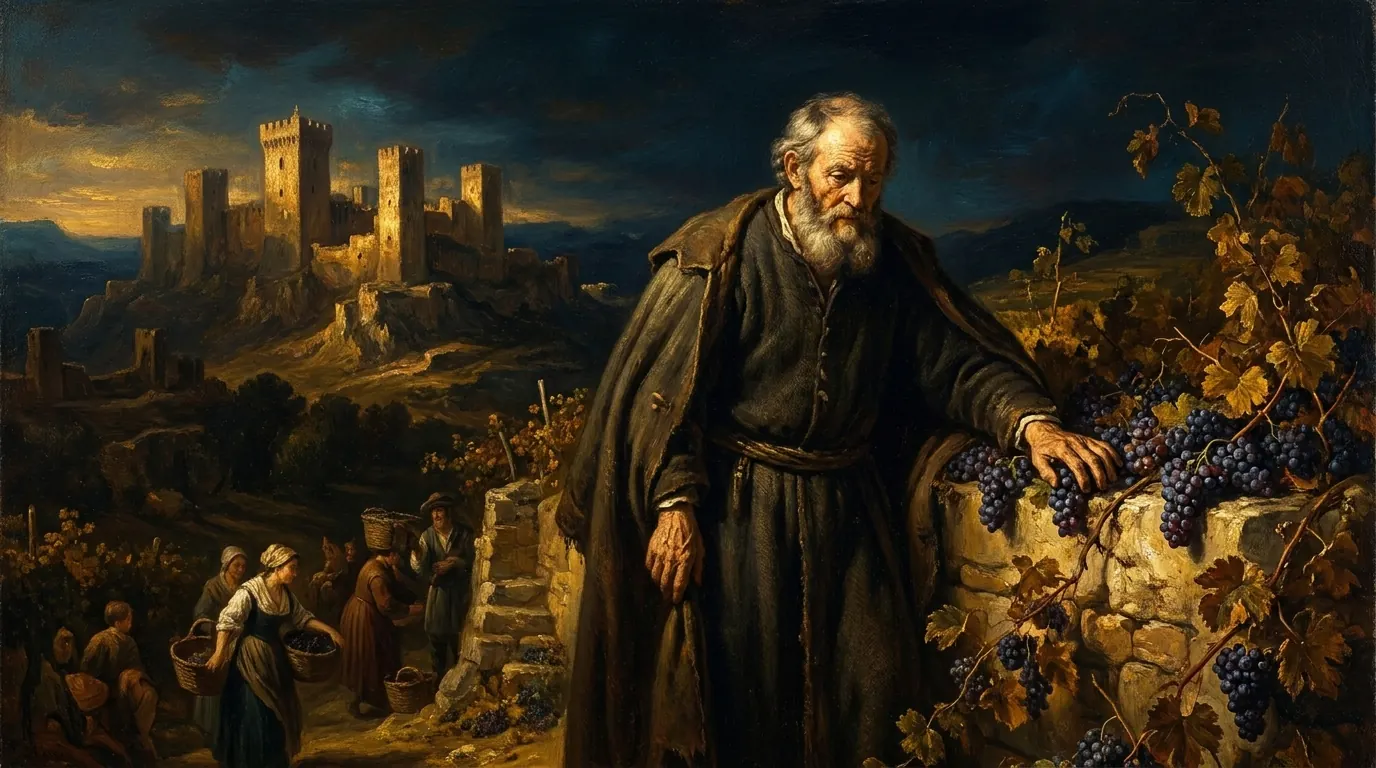
Naboth's vineyard (1 Kings 21) is the story of a man who refused to sell inherited family land to King Ahab, even at a fair price, and was killed by a plot for it. The story shows that family land held under God's law was more than a market asset, and that greed backed by power destroys the innocent. For your own money, it raises a real question: which assets do you hold for your family across generations, and how do you protect them?
Put it into practice
List everything you own with our Net Worth Calculator, then read how Scripture treats land in what the Bible says about buying land and real estate. For the whole biblical picture of money, grab the free Biblical Blueprint for Money (41-page PDF, no signup).
What happened in 1 Kings 21
Ahab was king of Israel, and his palace stood in Jezreel. Next to it lay a vineyard that belonged to a man named Naboth. Ahab wanted it for a vegetable garden and made Naboth an offer: a better vineyard in exchange, or its value in money, whichever he preferred (1 Kings 21:2).
Naboth's answer is short. “The LORD forbid that I should give you the inheritance of my fathers” (1 Kings 21:3). The offer was fair on its face, and Naboth declined anyway, because the vineyard was land his family held as an inheritance from God.
Ahab went home sulking and refused to eat. His wife Jezebel took over. She wrote letters in Ahab's name, sealed them with his seal, and sent them to the elders and nobles of the city. Her instructions were to seat Naboth at the head of the people, bring two worthless men to accuse him of cursing God and the king, and then carry him out for stoning. The elders did it. When Jezebel heard that Naboth was dead, she told Ahab to go take the vineyard.
The prophet Elijah met Ahab in the vineyard with a message from God: “Have you killed and also taken possession?” (1 Kings 21:19). The judgment that followed fell on Ahab's house. Ahab did humble himself, and God delayed part of the punishment (1 Kings 21:27-29), which shows that God notices repentance even in a king.
Why Naboth said no
Naboth's refusal makes sense inside the law of Israel. God divided the promised land among the tribes and families. Leviticus 25:23 gives the governing rule: “The land shall not be sold in perpetuity, for the land is mine. For you are strangers and sojourners with me.” Land was held in trust. It could be leased or pledged for a season, and it returned to the family in the Year of Jubilee (Leviticus 25:10, 25:28). Numbers 36:7 protects the tribal inheritance from passing to another tribe.
For Naboth, selling the vineyard meant breaking the family's place in God's covenant promise. His answer was a matter of faithfulness, and price had nothing to do with it. Our page on the Year of Jubilee explains how the whole system protected families from permanent loss of their land.
This matters when we apply the story. We live under different laws and a different economy. Christians are not bound to keep ancestral land in a tribal system, and many sell property for good reasons. Proverbs 31:16 praises the wife of noble character who “considers a field and buys it.” Jeremiah bought a field from his cousin as a sign of hope during a siege, weighing out seventeen shekels of silver (Jeremiah 32:9). Buying and selling land is not sinful. The lesson from Naboth is narrower and sturdier: some assets carry a purpose beyond their price, and pressure from the powerful is never a reason to give them up.
Three lessons about money and stewardship
| Lesson from 1 Kings 21 | Modern application |
|---|---|
| Some assets have a purpose beyond their price (v. 3) | Decide which family assets you hold for the long term and write the reason down |
| Covetousness grows when we can see what someone else has (v. 2) | Guard against envy of a neighbor's home, land or business |
| Power can rig the process (vv. 8-14) | Read contracts, keep records, get independent advice, and beware of pressure to sign quickly |
| God sees what the powerful hide (vv. 17-19) | Do business honestly, especially when no one is watching |
First, hold some assets for the next generation. Proverbs 13:22 says, “A good man leaves an inheritance to his children's children.” A house, a small farm, a family business, or a modest investment account can become that inheritance if you protect it from careless sale, high-interest debt and family disputes.
Second, watch your own heart. Ahab was king and had a palace, and a small vineyard next door still ruined his peace. The tenth commandment forbids coveting a neighbor's house or anything that belongs to him (Exodus 20:17). Our page on what covet means in the Bible goes deeper. If you catch yourself resenting what a neighbor owns, take that as a signal to give thanks and to give something away.
Third, refuse to be rushed. Naboth was pressured by a person who could take his life. Most of us face a smaller version: the developer with a deadline, the salesperson who says the price expires tonight, the relative who wants a quick signature. You have the right to slow down and ask questions.
Keeping family assets across generations
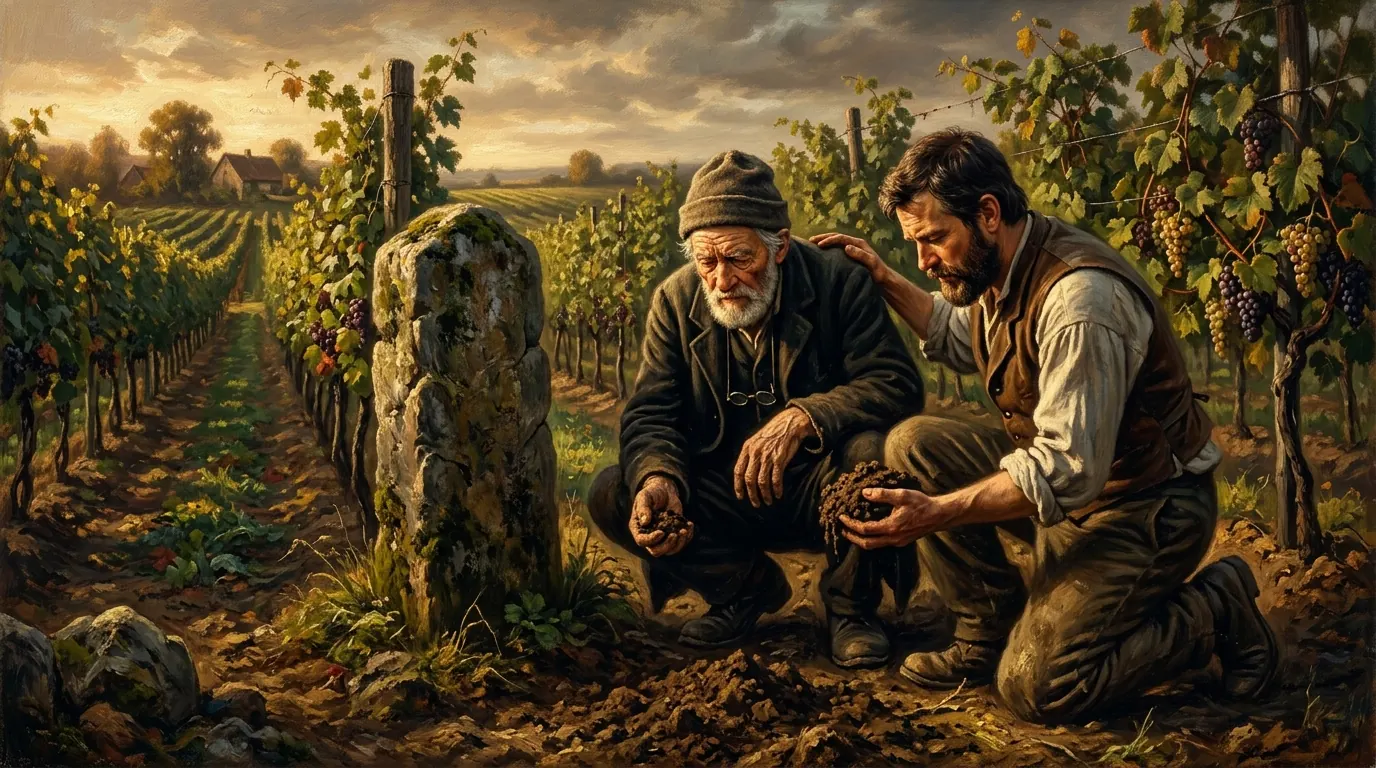
Many families lose inherited property for ordinary reasons. Taxes go unpaid, heirs disagree, the owner dies without clear paperwork, or a sale looks easier than management. The following illustration uses round numbers to show why the decision needs a plan. It is a hypothetical, and your figures will differ.
| Option for 40 inherited acres | What it might mean |
|---|---|
| Sell now for $300,000 | A one-time sum. Taxes and the loss of the land itself follow. The money must be managed well or it disappears within a generation. |
| Lease the land for $9,000 a year | A steady 3% of the offer price in rent (9,000 divided by 300,000), and the family keeps the asset. Property tax and upkeep reduce that number. |
| Farm or use the land yourself | Income depends on skill, weather and markets. It asks for time and gives the next generation a place to work. |
| Sell part and keep the homestead | Cash for debt or repairs while a piece stays in the family. A balanced choice for many families. |
None of these options is the “biblical” one by itself. What Scripture asks is that the choice come from wisdom, peaceful family agreement and honest dealing. Talk with your pastor, a real-estate attorney and a tax professional before any large sale. Our pages on Christian estate planning and land trusts versus living trusts cover the legal tools that keep property from tangling up after a death.
Two cautions balance the picture. First, a family that holds land for sentimental reasons while sinking into high-interest debt is not obeying Naboth's example. Sometimes a wise sale of a portion frees the family from a real burden (Proverbs 22:7 warns that the borrower is the slave of the lender). Second, holding an asset does not guarantee it will grow, and holding too much of one thing carries risk. Wisdom weighs both.
Scenarios from ordinary life
The developer's letter. A family with a home place of 12 acres gets a letter from a developer offering a price well above what neighbors sold for last year. The letter says the offer expires in ten days. The family asks for an independent appraisal, a meeting with an attorney and a pastor's counsel. They discover the buyer's deadline was flexible. Naboth stood firm against a king. This family only had to ask for time.
The family dispute. Three siblings inherit a rental house with no written plan. One wants to sell, one wants to keep it, and one lives in it. A calm conversation, an outside mediator, and a written agreement on who pays taxes and who receives rent prevents a bitter court case. Agreement before the crisis is cheaper than lawyers after it.
The neighbor who wants your land. A lot you own sits beside a growing business, and the owner keeps asking. Sell if the price is fair and you have peace about it. Say no if you do not. Neither answer makes you greedy.
A framework: protect what God has entrusted to you
1. Inventory what your family holds. Land, a house, a business, investments, and heirlooms. Use the Net Worth Calculator to see the whole picture.
2. Decide which assets are for the long term. Write a sentence explaining why each one stays in the family. Naboth could answer in one line, and you should be able to as well.
3. Put the paperwork in order. A will or trust, clear titles, and a list of accounts. Ask an estate-planning attorney to review it.
4. Get independent advice before any large sale. Ask for a second appraisal, a tax opinion and a pastor's counsel. Take the time you need.
5. Keep the family talking. Meet once a year with heirs to share the plan and the rules. Surprises breed disputes.
6. Deal honestly when you buy. If you are the one seeking land or a business, offer a fair price and accept a no. Ahab's offer was fair; his response to hearing no was the sin.
7. Give thanks and give away. Land, wealth and time come from God. Holding them with an open hand, and giving generously, protects your heart from Ahab's disease.
Internal study path
Keep going with the Bible on buying land and real estate, the Year of Jubilee, Christian estate planning, Proverbs 13:22, what covet means, whether buying a house is biblical, and our stewardship hub.